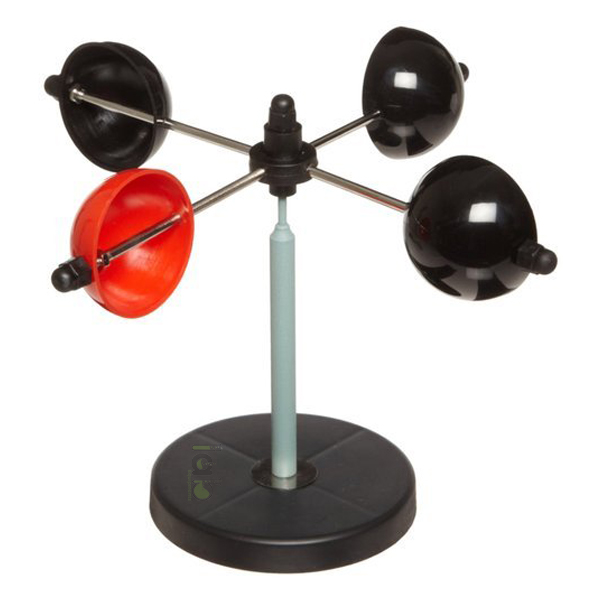
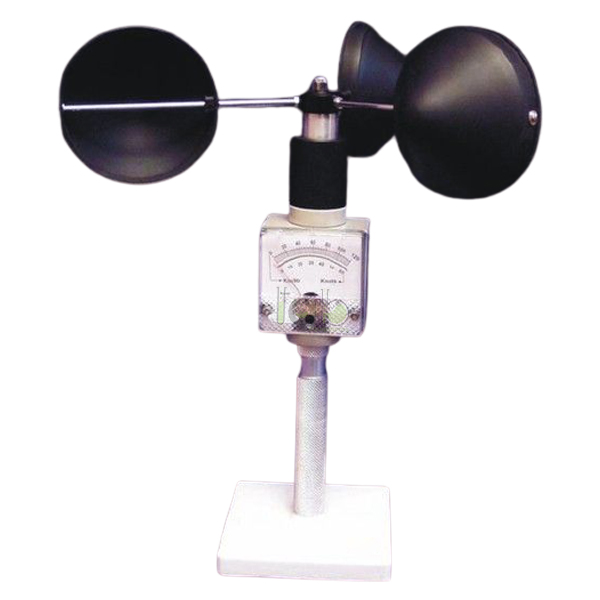
Windmill Model

Product Code : SCL-PMP-11148
Quick answer: The windmill model is a classroom demonstration of wind energy: when air is directed at its rotor, the blades turn and show how the kinetic energy of moving air becomes rotational mechanical energy. It is used in physics, renewable energy, environmental science and introductory engineering lessons. Lab Exports manufactures it in Delhi for schools, colleges and universities.
Specifications
| Parameter | Detail |
|---|---|
| Educational principle | Wind energy, kinetic energy, rotational motion and energy conversion |
| Included | 1 x windmill model |
No generator, electrical output or meter is assumed; any such configuration is confirmed with the quotation.
How the model is used in teaching
Wind is air in motion, and moving air carries kinetic energy. When it strikes the angled blades of a windmill, part of that energy pushes the blades round and becomes rotational mechanical energy of the rotor. In a full-size wind turbine the rotor drives a generator, turning mechanical energy into electrical energy. The model lets students see the first step of this chain directly and discuss the rest.
The power available in wind rises with the cube of the wind speed, which is why wind farms are placed on open, windy sites.
- Place the model on a stable table in view of the class.
- Direct an air stream from a fan or blower at the rotor, or take the model outdoors into a breeze.
- Change the distance or the fan setting and ask students to describe how the speed of rotation changes.
- Discuss the energy chain from moving air to rotating blades and, in a real turbine, to electricity.
Key features
- Visual demonstration of how airflow causes rotor and blade movement.
- Supports lessons on the conversion of wind energy into mechanical energy.
- Designed for teacher demonstrations and guided student observation.
- Useful across physics, renewable energy, environmental science and introductory engineering.
- Suits science exhibitions and practical STEM activities.
Documentation and supply
Most Lab Exports products carry a one-year manufacturer warranty.
Lab Exports manufactures the windmill model at its works in Laxmi Nagar, Delhi, and supplies it to schools, colleges and universities in India and 60+ countries, handling the export documents for each shipment. More about the company is on the About Lab Exports page.
Related Physics Miscellaneous Products products
- Resonance Apparatus (SCL-PMP-11143)
- Tuning Fork with Resonance (SCL-PMP-11140)
- Drawing Board (SCL-PMP-11137)
- Transverse and Longitudinal Wave Model (SCL-PMP-11121)
- Doppler Effect Kit (SCL-PMP-11117)
- Powell's Wave (SCL-PMP-11115)
The full range is in the Physics Miscellaneous Products section of the Physics Lab range.
Frequently asked questions
What does the windmill model demonstrate?
It demonstrates that moving air carries kinetic energy which can turn a rotor, converting wind energy into rotational mechanical energy.
Does the windmill model generate electricity?
No electrical output is specified for this model. Buyers who need a generator or meter with it should say so in the enquiry so the configuration can be confirmed.
What is the price of the windmill model?
Prices are not published on the website. Add the windmill model to the Enquiry Cart with the Add To Cart button on this page, or email [email protected] with the house code SCL-PMP-11148 and the quantity, to receive a quotation.
Does Lab Exports manufacture the windmill model?
Yes. Lab Exports manufactures the windmill model at its works at 11/315, Lalita Park, Laxmi Nagar, Delhi 110092, under house code SCL-PMP-11148.
Request a quote
Email [email protected] with the house code SCL-PMP-11148 and the quantity, or add the windmill model to the Enquiry Cart with the Add To Cart button on this page. Tender buyers can also see the Tenders and OEM page.