Solar Cell Characteristics Apparatus
Product Code : SCL-EAE-11298
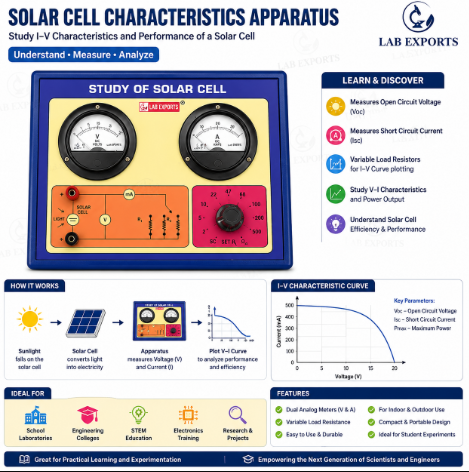
Quick answer: The Solar Cell Characteristics Apparatus is a photovoltaic trainer for plotting the current-voltage (I-V) characteristic of a solar cell. Students illuminate the cell, vary the load and record voltage and current to find open-circuit voltage, short-circuit current and the maximum power point. Lab Exports manufactures it in Delhi for schools, colleges and universities.
Specifications
| Parameter | Detail |
|---|---|
| Apparatus type | Educational photovoltaic-characteristics trainer |
| Measured quantities | Solar-cell output voltage and current |
| Primary experiment | Plotting the current-voltage characteristic of a solar cell |
| Load | Variable load for multiple operating points |
Ask for the meter ranges, cell type and the illumination arrangement with the quotation.
How the solar cell I-V experiment is done
A solar cell is a p-n junction that generates a current when light is absorbed. With no load connected it shows its open-circuit voltage Voc; with its terminals shorted it delivers the short-circuit current Isc. Between those limits each value of load resistance gives a different operating point, and the set of points traces the characteristic I-V curve.
- Place the apparatus on a stable, dry bench and connect the solar cell, meters and variable load as marked.
- Set the load control to its recommended starting position.
- Direct a suitable light source evenly onto the cell surface.
- Record the open-circuit voltage with no load current flowing.
- Adjust the load in small steps, recording voltage and current each time, down to the short-circuit condition.
Plotting I against V gives the characteristic curve. Multiplying V and I at each point gives the output power P = V x I, which peaks at the maximum power point; the fill factor is Pmax / (Voc x Isc). Repeating the run at a different light intensity shows how Isc rises with illumination while Voc changes much less.
Key features
- Measures solar-cell output voltage and current
- Variable load gives many operating points for a full I-V curve
- Readings support power calculation and location of the maximum power point
- Instructional layout makes the measurement circuit easy to follow
- Allows comparison of output under different light intensities
- Links photovoltaic theory to measured laboratory results
Documentation and supply
Most Lab Exports products carry a one-year manufacturer warranty.
Lab Exports manufactures the solar cell characteristics apparatus at its works in Laxmi Nagar, Delhi, and supplies it to schools, colleges and universities in India and 60+ countries, handling the export documents for each shipment. More about the company is on the About Lab Exports page.
Related Electrical and Electronics products
- Portable Wheatstone Bridge (SCL-EAE-11297)
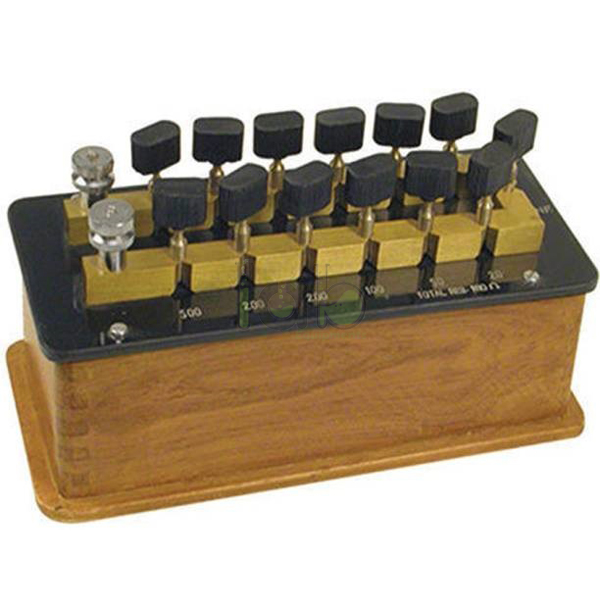
- 7 Decade Resistance Box (SCL-EAE-11296)
- IC Regulated Battery Eliminator (SCL-EAE-11295)
- Mini Solar Pump Model (SCL-EAE-11294)
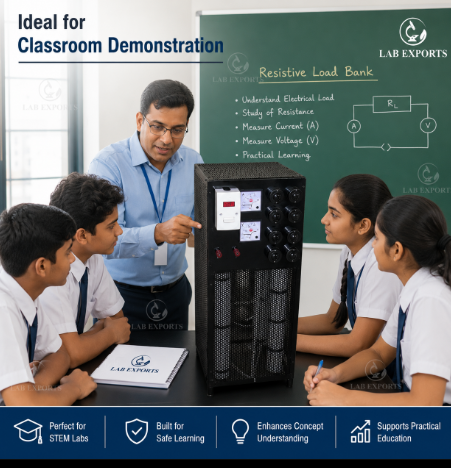
- Resistive Load Bank (SCL-EAE-11302)
- Big Solar Fan Model (SCL-EAE-11293)
The full range is in the Electrical and Electronics section of the Physics Lab range.
Frequently asked questions
What does the solar cell characteristics experiment measure?
It measures the voltage and current of an illuminated solar cell at different loads, giving the I-V curve, the open-circuit voltage, the short-circuit current and the maximum power point.
How is the maximum power point found?
Multiply voltage and current at each reading to get power. The reading with the highest product marks the approximate maximum power point on the I-V curve.
Request a quote
Email [email protected] with the house code SCL-EAE-11298 and the quantity, or add the solar cell characteristics apparatus to the Enquiry Cart with the Add To Cart button on this page. Tender buyers can also see the Tenders and OEM page.
Wire.jpg)