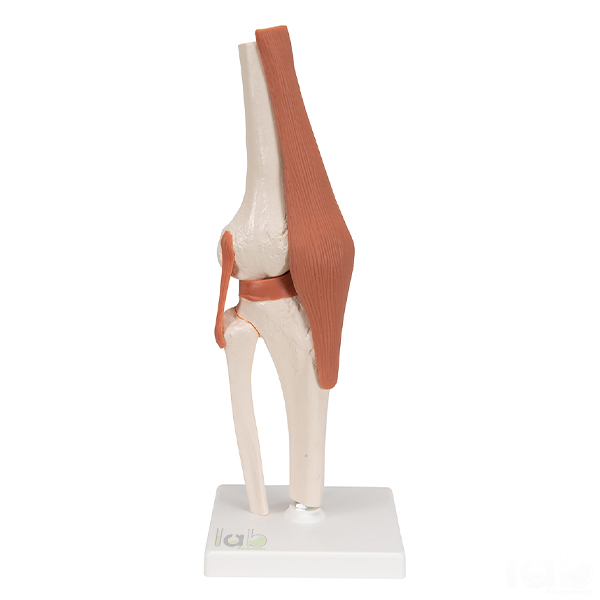
Shoulder Joint Model

Product Code : SCL-SBAJM-11369
Quick answer: The Shoulder Joint Model is an articulated, multi-directional teaching model that demonstrates abduction, adduction, anteversion, retroversion and internal and external rotation of the shoulder. It lets teachers show how the upper arm moves away from, towards, in front of and behind the body. Lab Exports manufactures it in Delhi for schools, colleges and universities.
Specifications
| Parameter | Details |
|---|---|
| Movements shown | Abduction, adduction, anteversion, retroversion, internal and external rotation |
| Format | Articulated, multi-directional demonstration model |
Material, dimensions and mounting are confirmed with each quotation; email [email protected] with the house code SCL-SBAJM-11369.
How the model is used in teaching
The shoulder is the most mobile joint in the body. The rounded head of the humerus sits against a shallow socket on the scapula, the glenoid cavity, so the arm can move in almost every direction. The price of this freedom is stability: the joint relies heavily on the surrounding muscles and ligaments, which is why shoulder dislocations are relatively common.
With an articulated model, each movement can be shown on its own. Abduction lifts the arm out to the side and adduction brings it back to the body; anteversion swings it forward and retroversion takes it backward; rotation turns the humerus inward or outward about its long axis.
- Identify the head of the humerus and the socket on the scapula.
- Lift the arm sideways and lower it again to show abduction and adduction.
- Swing the arm forward and backward for anteversion and retroversion.
- Rotate the humerus inward and outward and compare the range with the hip joint.
Key features
- Articulated, multi-directional joint for live demonstration
- Shows abduction and adduction relative to the midline
- Shows anteversion and retroversion
- Shows internal and external rotation of the humerus
- Suited to repeated hands-on use in biology and physiotherapy lessons
Documentation and supply
Most Lab Exports products carry a one-year manufacturer warranty.
Lab Exports manufactures the shoulder joint model at its works in Laxmi Nagar, Delhi, and supplies it to schools, colleges and universities in India and 60+ countries, handling the export documents for each shipment. More about the company is on the About Lab Exports page.
Related Skeleton, Bones and Joints Model products
- Elbow Joint Model (SCL-SBAJM-11368)
- Knee Joint Model (SCL-SBAJM-11370)
- Human Joints Model (SCL-SBAJM-11371)
- Human Lumbar Spinal Column Model (EL-SBAJM-10529)
- Human Thoracic Spinal Column Model (EL-SBAJM-10528)
- Human Femur Bone Model (EL-SBAJM-10527)
The full range is in the Skeleton, Bones and Joints Model section of the Biology Lab range.
Frequently asked questions
What movements does the shoulder joint model demonstrate?
Abduction, adduction, anteversion, retroversion and internal and external rotation.
Why is the shoulder more mobile than the hip?
The shoulder socket is shallow, so the head of the humerus can move in more directions; the hip socket is deep and holds the femur more firmly.
What is the price of the shoulder joint model?
Prices are not published on the website. Add the shoulder joint model to the Enquiry Cart with the Add To Cart button on this page, or email [email protected] with the house code SCL-SBAJM-11369 and the quantity, to receive a quotation.
Does Lab Exports manufacture the shoulder joint model?
Yes. Lab Exports manufactures the shoulder joint model at its works at 11/315, Lalita Park, Laxmi Nagar, Delhi 110092, under house code SCL-SBAJM-11369.
Request a quote
Email [email protected] with the house code SCL-SBAJM-11369 and the quantity, or add the shoulder joint model to the Enquiry Cart with the Add To Cart button on this page. Tender buyers can also see the Tenders and OEM page.