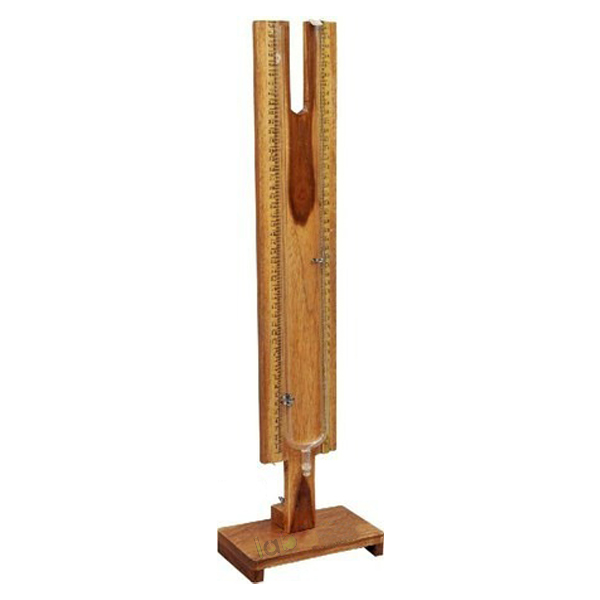
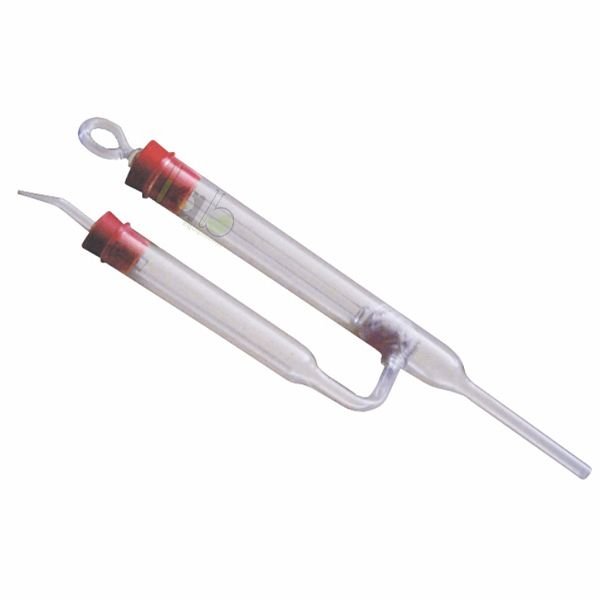
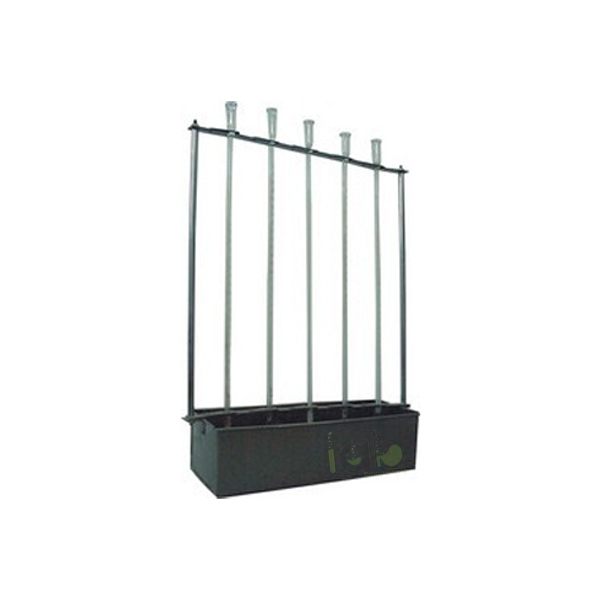
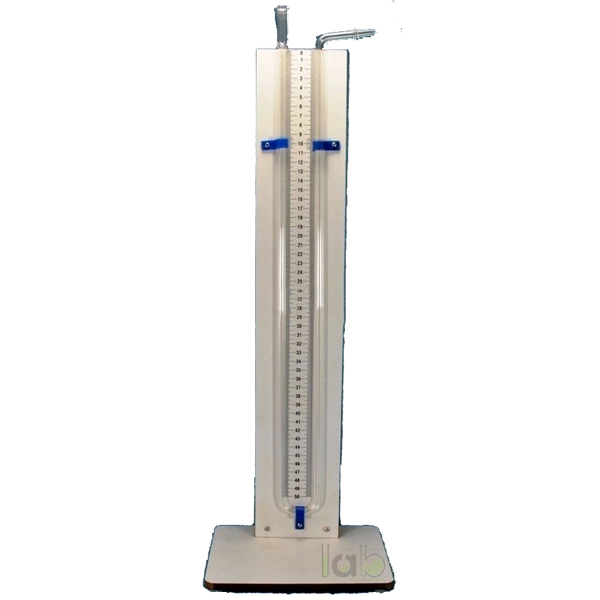
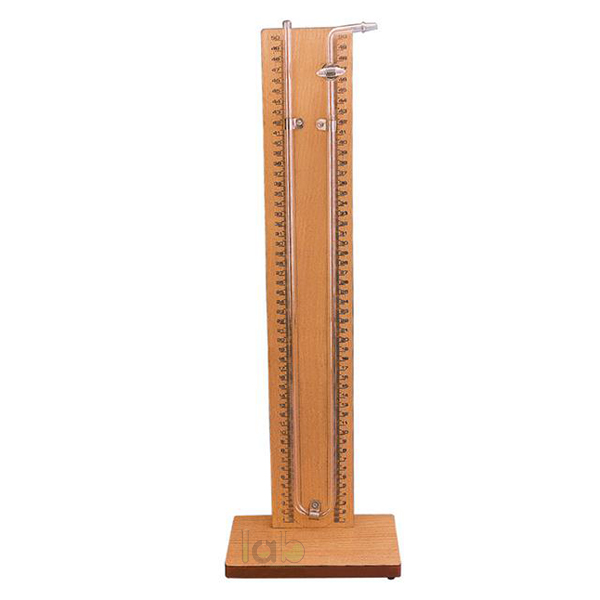
Boyle’s Law Apparatus

Product Code : SCL-POM-11240
Quick answer: The Boyle's law apparatus is used to verify Boyle's law: at constant temperature, the pressure of a fixed mass of trapped gas varies inversely with its volume, so pV stays constant. Students change the volume of the gas, record the matching pressures and plot the results. Lab Exports manufactures it in Delhi for schools, colleges and universities.
Specifications
| Item | Specification |
|---|---|
| Principle shown | Inverse relationship between the pressure and volume of a confined gas |
| Governing relationship | pV = constant at approximately constant temperature |
Pressure range, volume scale and operating fluid are not listed on this page; for the full specification and packing list, email [email protected] with the house code SCL-POM-11240.
How the Boyle's law experiment is done
Boyle's law states that for a fixed mass of gas kept at constant temperature, pressure and volume are inversely proportional: pV = constant, or p1V1 = p2V2 when two conditions are compared. Halving the volume of the trapped gas doubles its pressure, and doubling the volume halves it.
In kinetic terms, squeezing the same number of molecules into a smaller space means they strike each unit area of the walls more often, so the pressure rises. The experiment turns this relationship into readings that students take for themselves.
- Place the apparatus securely on a stable laboratory bench.
- Inspect the tubing, seals and measuring parts for visible damage.
- Set the trapped gas to its starting volume and record the volume and pressure.
- Change the volume in steps, waiting after each change for the gas to return to room temperature, and record each pair of readings.
- Plot pressure against volume, and pressure against 1/volume.
The p-V graph is a curve (a rectangular hyperbola), while the graph of p against 1/V is a straight line through the origin, which confirms the inverse relationship. Working out the product pV for each reading and finding it nearly constant is a second check; a steady drift points to a leak or a change in temperature.
Key features
- Verifies Boyle's law with measured pairs of pressure and volume readings
- Supports graph work: p against V, and p against 1/V
- Suited to teacher demonstrations and supervised student practicals
- Covers compression, gas behaviour and pressure change in the properties of matter syllabus
- Reusable for repeated experiments when seals and measuring parts are maintained
Documentation and supply
Most Lab Exports products carry a one-year manufacturer warranty.
Lab Exports manufactures the Boyle's law apparatus at its works in Laxmi Nagar, Delhi, and supplies it to schools, colleges and universities in India and 60+ countries, handling the export documents for each shipment. More about the company is on the About Lab Exports page.
Related Properties of Matter products
- Hare's Apparatus (SCL-POM-11179)
- Lead Shots (SCL-POM-11113)
- Kinetic Theory Apparatus (EL-POM-10380)
- Fluid Pressure Apparatus, Hydraulic Press (EL-POM-10379)
- Force Pump (EL-POM-10378)
- Lift Pump (EL-POM-10377)
The full range is in the Properties of Matter section of the Physics Lab range.
Frequently asked questions
What does the Boyle's law apparatus demonstrate?
It demonstrates that the pressure of a fixed mass of gas at constant temperature varies inversely with its volume, so pV stays constant.
Which graphs are drawn from the readings?
Pressure against volume gives a curve, and pressure against 1/volume gives a straight line through the origin, confirming Boyle's law.
Why wait between readings?
Compressing a gas warms it slightly. Waiting lets the gas return to room temperature, so the condition of constant temperature is met.
What is the price of the Boyle's law apparatus?
Prices are not published on the website. Add the Boyle's law apparatus to the Enquiry Cart with the Add To Cart button on this page, or email [email protected] with the house code SCL-POM-11240 and the quantity, to receive a quotation.
Does Lab Exports manufacture the Boyle's law apparatus?
Yes. Lab Exports manufactures the Boyle's law apparatus at its works at 11/315, Lalita Park, Laxmi Nagar, Delhi 110092, under house code SCL-POM-11240.
Request a quote
Email [email protected] with the house code SCL-POM-11240 and the quantity, or add the Boyle's law apparatus to the Enquiry Cart with the Add To Cart button on this page. Tender buyers can also see the Tenders and OEM page.
.jpg)